

The most dangerous phase of a premium selling career isn’t losing. It’s winning.
Winning consistently, for months, with a 85-92% win rate and a growing account balance. That feeling — quiet confidence that you’ve figured out the game — is exactly what precedes the blow-up.
Not because the strategy is wrong. Short premium works. The variance risk premium is real, well-documented, and harvested by institutional desks every day. But institutions have risk infrastructure that most retail traders don’t even know exists. And that gap between “correct strategy” and “missing infrastructure” is where accounts die.
Here are the three structural risks that a high win rate hides from you.
1. The correlation trap
You have ten open positions. NVDA short put, AAPL iron condor, META strangle, AMZN short put, QQQ short put, MSFT credit spread, GOOGL short put, plus a few others. Different tickers. Different strikes. Different expiration dates. Looks diversified.
It isn’t.

Low correlation in calm markets. One massive bet when it matters most.
During normal market conditions, correlations between these names hover around 0.3 to 0.5. Your portfolio behaves like it has ten independent bets. But when the S&P drops 8% in two weeks — the kind of correction that happens roughly once a year — correlations spike to 0.85 or higher. Research from the Basel Committee, MSCI, and Caporin & Garcia-Jorcano has consistently shown that correlations increase asymmetrically: they jump far more in crashes than in rallies.
Your ten “diversified” positions become one massive tech bet. Every single one gets tested at the same time.
2. The margin mirage
Margin requirements feel static. You check your buying power, see 45% utilization, and think you have room. But margin is non-linear.

45% utilization in calm markets. 120% when VIX triples. The gauge doesn’t just move — it breaks.
When the VIX jumps from 14 to 35 — something that can happen in a single week — margin requirements on short options can triple or quadruple. That comfortable 45% buying power utilization can become 120% overnight. Not because your positions lost money yet, but because the cost of holding them just exploded.
This is where forced liquidation begins. Your broker doesn’t care about your thesis. The margin call arrives, positions get closed at the worst possible prices, and you realize that “buying power available” was never a measure of safety — it was a snapshot of calm conditions that no longer exist.
3. The gamma acceleration effect
This one is the most technical and the least understood.
When you sell premium, you’re short gamma. That means your losses accelerate as the underlying moves against you. A 3% move doesn’t cost you 3% — it costs you more, because gamma works against you non-linearly.
Now compound that across a portfolio where multiple short positions cluster around similar SPY-equivalent price levels. If you have short puts on NVDA, AAPL, and META at roughly the same SPY-equivalent level — you don’t just have three losing positions during a correction. You have three positions where gamma is accelerating losses simultaneously, on top of the correlation spike, on top of the margin expansion.
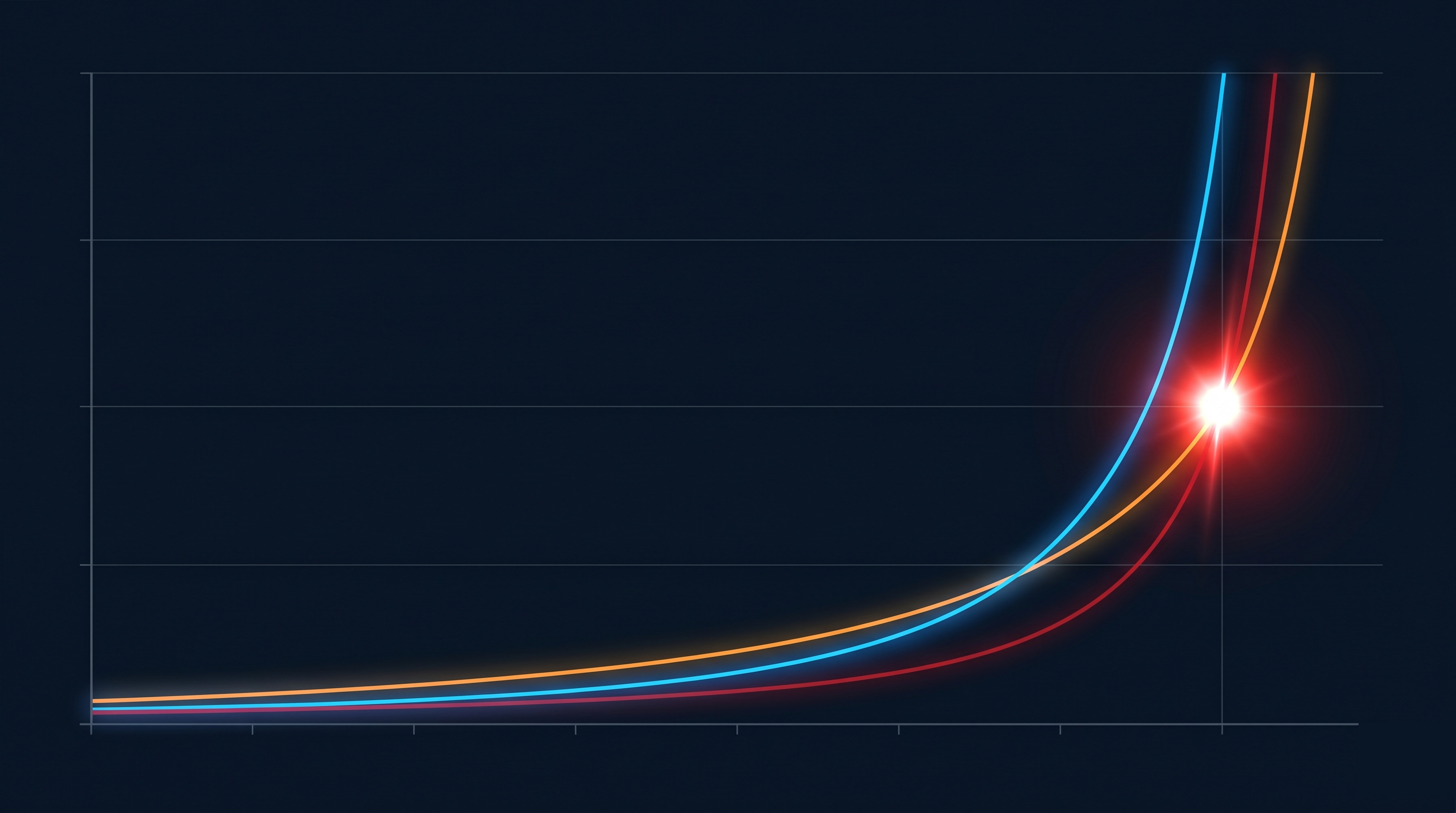
Correlation × margin non-linearity × gamma acceleration = catastrophic, non-linear portfolio loss.
Why win rate doesn’t protect you
The cruelest part of this dynamic is that everything described above is invisible during winning periods. Win rate doesn’t measure portfolio structure. It doesn’t measure concentration. It doesn’t measure correlation exposure. It doesn’t measure non-linear margin risk.
A trader with a 92% win rate and a structurally vulnerable portfolio will outperform a trader with a 75% win rate and proper risk architecture — right up until the correction. Then the first trader loses in two weeks what took six months to build.
This isn’t a prediction. This is the documented failure mode of retail premium selling.
What this means for your portfolio
The solution isn’t to stop selling premium. The strategy works. The solution is to have infrastructure that monitors the risks your broker doesn’t show you.
These aren’t advanced concepts reserved for institutional desks. They’re the minimum infrastructure for anyone harvesting the variance risk premium with real money.
This is the first article in the Hidden Risks series — exploring the structural failures that quietly destroy income portfolios, even when every individual trade looks good.
PortfolioShield is an analytical tool, not a financial advisor. All content is for educational purposes only. Options trading involves substantial risk of loss.